
Checking Criminal History in Mission
Start with the kind of Mission record and how recent it is. A police narrative belongs with Mission Police or the city’s Open Records Division. Immediate custody may remain at the Mission Police Detention Center. A city citation, ordinance case, or Class C matter belongs with Mission Municipal Court. After a transfer, current custody can appear in Hidalgo County systems, while Class A and B misdemeanors and felony cases move to different county clerks. Texas DPS offers a separate statewide conviction and deferred-adjudication name search.
Use a channel-by-channel check instead of treating any single Mission name result as complete:
- Request the local police or incident record through Mission’s official open-records channel.
- Call the Mission Jail Bureau first when the arrest or detention is very recent.
- Check Mission Municipal Court for a traffic citation, ordinance case, Class C charge, or city warrant matter.
- Check Hidalgo County detention and the responsible county clerk after transfer or filing of a higher charge.
- Use Texas DPS for its statewide public history slice, or the FAST fingerprint process to review your own DPS-held history.
Mission Police Detention Records
Mission operates its own Police Detention Center around the clock. That local custody step makes Mission different from a city where all arrestees immediately appear in a county jail system. For a recent Mission arrest, the first useful call is the Jail Bureau at 956-584-5060. The police department’s general number is 956-584-5000. No public city detainee roster, fixed transfer schedule, or facility capacity was verified, so a direct call is the supported route.
The official Mission Police bureaus page describes the city detention operation as a 24-hour service.

This source explains why an early Mission custody search should begin with the city Jail Bureau before the county detention channel.
Mission Police Department Records
Mission Police Department is at 1200 E. 8th Street, Mission, TX 78572. It creates the report tied to a city police response or arrest. That report can describe the event, alleged conduct, officers, time, and place, but it does not decide guilt or supply the final court outcome. Mission routes public-record requests through the City Secretary’s Open Records Division and links a newer online request portal. No official PD-specific request form, flat copy fee, or arrest blotter was found.
Direct office lines help route a focused Mission records question. Traffic and Criminal Investigations can be reached at 956-584-5025. Property and Evidence is 956-584-5065. Community Relations is 956-584-5144. The official Mission police and jail directory places those contacts within the department rather than a third-party directory.

The directory gives Mission residents a verified phone fallback when a web portal does not answer which police unit owns the requested material.
Mission Records on East Eighth
Police, city detention, and Municipal Court functions share the 1200 E. 8th Street address. That physical overlap is convenient, but it does not merge the records. Mission Police owns its incident narrative. Detention staff track city custody. Municipal Court keeps its own citation and fine-only case file. A requester should name the intended office and document rather than ask generally for “the criminal record.” Clear routing reduces the chance that a city court question lands with police records or that a detention inquiry is mistaken for a court request.
A useful request states the incident or citation date, subject name, known report or citation number, location, and the exact existing item sought. Mission did not publish a verified flat police or court copy price in the reviewed material. Ask for a current estimate. Do not transfer another city’s fee schedule to Mission. The Texas Public Information Act lets the custodian apply lawful charges and exceptions, but it does not authorize made-up local pricing.
Mission Arrests and Bookings
A Mission arrest produces related but separate records. The officer creates the arrest or offense report. The Mission detention center records intake and city custody. A judge acting as magistrate may create probable-cause and bond paperwork. If the person transfers to Hidalgo County custody, the county jail creates another booking layer. A prosecutor and clerk later build the formal case file. Each record answers a different question, and charge descriptions may change across those stages.
Call the Mission Jail Bureau first for very recent custody, then Hidalgo Adult Detention at 956-381-7900 if the person has moved or the timing is unclear. An empty city result does not prove there was no arrest. It may reflect a transfer or release. The county’s Hidalgo County arrest lookup covers the next layer without replacing the Mission police report.
Mission Citation Record Search
Mission provides an official online municipal citation search and payment interface. Its scope is narrow by design. It supports the Municipal Court’s city-level citation work. It is not a county felony search, a Class A or B misdemeanor database, a jail roster, or a statewide criminal history. The interactive page did not expose its exact search identifiers during research, so no field names should be promised before the live screen is checked.
The official Mission municipal citation search is the correct source for that limited city court function.
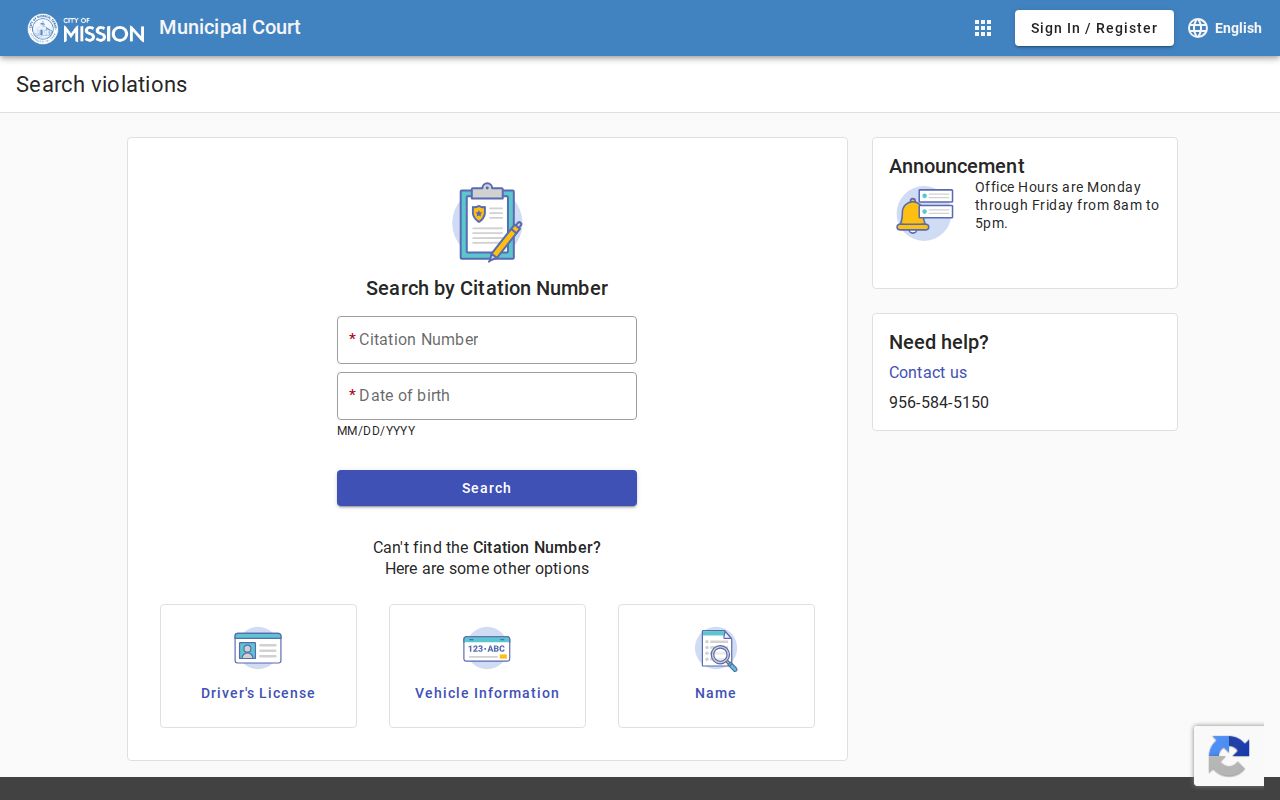
The interface is useful when a Mission citation falls within municipal jurisdiction, but a blank result cannot clear a person of county or district-court matters.
Municipal Court Records in Mission
Mission Municipal Court hears Class C offenses, Mission traffic citations, and city ordinance cases. It does not hear civil cases or small claims, and it is not the court for county felonies or Class A and B misdemeanors. Judges also magistrate arrested people, which creates a city-level link between detention and early court paperwork. The court is at 1200 E. 8th Street, Mission, TX 78572, with a published phone number of 956-584-5150. Hours are Monday through Friday, 8 a.m. to 4 p.m., including lunch.
The official Mission Municipal Court page states the court’s city jurisdiction and contact details.
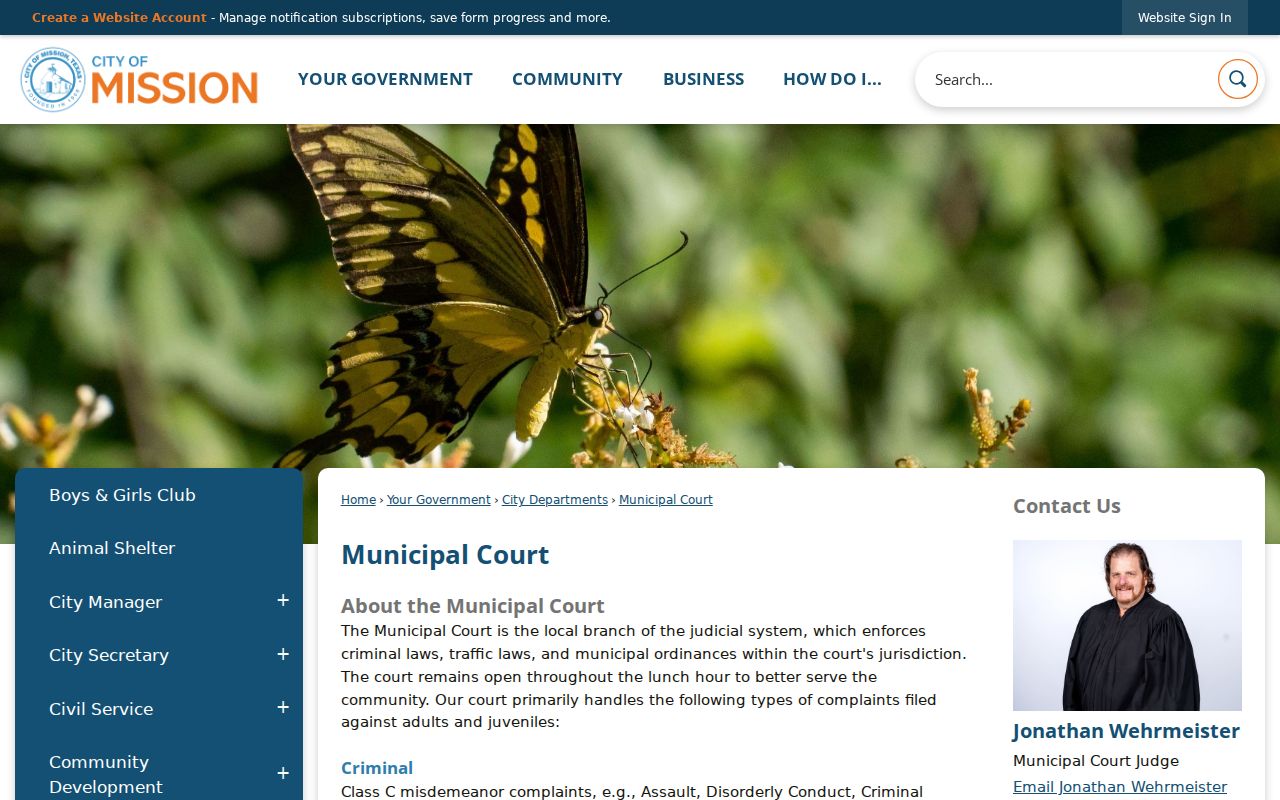
The city court source is the right place to confirm a Mission citation or municipal outcome before moving to a county clerk.
| Court Name | Mission Municipal Court |
|---|---|
| Case Types Heard | Class C offenses, Mission traffic citations, and city ordinance cases |
| Case Lookup Channel | Official citation search or the court at 956-584-5150 |
| What the Docket Shows | Municipal citation, city charge, docket activity, and available court outcome |
| Copies & Fees | No verified current copy fee was located; request an estimate from the court |
Mission Magistration Records
Mission judges act as magistrates for arrested people. Magistration is the early proceeding where legal warnings, probable cause, and bond matters can be addressed. It is not the same as a trial or final disposition. That distinction is especially important in Mission because a judge may create early paperwork while the eventual prosecution belongs in a Hidalgo County court. A municipal citation search should not be expected to display the full later case.
When someone needs proof of what happened after a Mission arrest, first ask which record is missing. Police can supply the incident layer. The Jail Bureau can help with initial custody. Mission Municipal Court can address its citation or magistration material. The Hidalgo County Clerk is the route for a filed Class A or B misdemeanor, and the District Clerk handles a filed felony. A certified disposition from the correct clerk is stronger evidence of the final outcome than an early booked charge.
Where Mission Records Go
Mission keeps the first stages local, but higher cases and later custody can move outside the city. Mission Police retains the officer’s narrative. Its detention center keeps the first custody record. Mission Municipal Court keeps the fine-only city docket and related magistration material within its authority. After county transfer, the Hidalgo Sheriff keeps county custody records. The County Clerk holds filed Class A and B misdemeanor cases, while the District Clerk holds felony cases.
Record flow: Mission Police Department › Hidalgo County courts › Texas Department of Public Safety
Reportable fingerprint arrest events and outcomes also flow to the Texas Department of Public Safety. That statewide Computerized Criminal History record depends on what the local agencies submit. It may lag a new Mission event or a corrected court outcome. The public DPS name product is narrower still because it exposes the conviction and deferred-adjudication information authorized by state law. It is not a substitute for the Mission report or the county court file.
Mission Archive Record Clues
Mission’s public archive can help locate city material by topic or date. Its visible controls include Keywords, an Archive dropdown, a Time Period dropdown, and Start and End date fields in month-day-year form. It also has a Search control. This archive is useful for locating public city notices or documents, but it should not be described as a police report database or personal criminal-history search.
For historical or civic research, start with a narrow phrase and date span. Then inspect which city office published the result. If the item points to a police event, request the source record through the Open Records Division. If it concerns a Mission court matter, use the municipal court. The archive may supply context or a date that improves a request, yet it does not replace a certified docket, police narrative, or custody entry.
Names in Mission Criminal Records
A name and date of birth help narrow a Mission search, but they do not prove identity. Mission’s city registry material states that caution and notes that fingerprints provide positive identification. The same practical limit applies when two people share similar names or when a record uses an alias. Before relying on a result, compare the jurisdiction, date, case or citation number, and other lawful identifiers available from the official custodian.
For review of one’s own complete DPS-held Texas record, use the FAST fingerprint process with service code 11FT12. A public DPS name query is not fingerprint confirmed and only returns the public conviction and deferred-adjudication slice. If the statewide history has an error, the sound path is a fingerprint personal review plus a certified court disposition sent through DPS error resolution. Mission police and court records may supply source facts, but DPS controls its state repository.
Public Access Rules in Mission
The Texas Public Information Act governs requests for Mission city and police records. A request should describe a document that exists. The city does not have to answer questions or create a new report. Government Code Section 552.108 permits specified law-enforcement and prosecution information to be withheld, while subsection 552.108(c) protects access to basic arrested-person, arrest, and crime information. Juvenile, victim, active-case, sealed, and other protected facts can still require redaction or withholding.
Key Statutes:
Texas Public Information Act, Government Code Chapter 552 - governs written requests and the law-enforcement records exception.
Government Code Sections 411.083 and 411.135 - makes DPS criminal history confidential except for access that Texas law expressly permits.
Code of Criminal Procedure Chapter 66 - creates the reporting framework for the Texas computerized criminal history system.
Mission’s City Secretary oversees Open Records and links the city request portal. The local route should be used for Mission police material. Court copies come from the court that maintains the case, and county custody comes from the sheriff after transfer. These boundaries preserve a useful rule: request the record from the office that created or maintains it, then compare later records only when the question requires a full timeline.